
Tree Planting Season: Choosing Trees, Tree Care & Grants
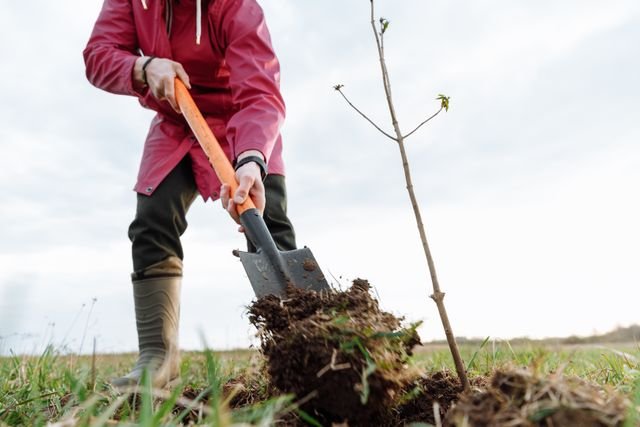
Leaves are falling and November marks the start of the tree planting season, and from hedgerows, to replanting to planting new hedgerows or agroforestry projects, it can feel like a race to get trees in before Spring while combatting waterlogged and frozen ground.
In the UK, tree planting season runs from November to March, while the trees are dormant. Many people ask if you need any permissions for tree planting, ultimately, this depends on the size of the project and whether your habitat has a protected status e.g. SSSi. For many or you, your management plans will include hedge or replacement planting following felling or losses.
In some cases, you may need an Environmental Impact Assessment (EIA), particularly if you’re planning an large planting scheme or woodland creation. This guide covers when to plant, what permissions and grants to check first, how to choose healthy trees, and how to keep them alive once they’re in the ground.
What you need to consider for tree planting
In the UK, trees are generally planted from November to March, during their dormant season.
Most woodland planting uses bare root trees (often called whips): young trees lifted from the nursery field without soil, available only while they are dormant. They are usually cheaper and lighter to handle than pot-grown trees, which really matters when you’re planting hundreds.
A few things to bear in mind:
- Don’t plant into frozen ground, snow or waterlogged soil. Wait for a better day.
- Never let bare roots dry out. This risks killing your trees as exposure to air both dries them out exposes them to bacteria.
- Keep roots covered in a bag or bucket as you move along the planting line.
- If you can’t plant straight away, keep the trees cool and the roots damp, and plant as soon as conditions allow.
- Tree protection – most areas have a problem with hungry deer but it’s also smaller mammals such as voles and rabbits you need to think about protecting your vulnerable whips from.
- Sourcing your trees – it’s recommended that if you can, buy your trees from your most local tree nursery. This is because your trees will have already learnt to grow in similar climatic conditions and built some immunity from local pests.
- Try not to leave any air pockets in your planting hole. Air pockets can lead to dieback and stress as the roots can’t absorb water and nutrients effectively and soil resistance helps roots push forward and develop a strong foundation.
Do I need permission to plant trees on my land?
For small schemes, usually not. For larger ones in England (e.g. woodland creation projects), you may need an EIA decision from the Forestry Commission before you start.
In England, planting under 0.5 hectares isn’t treated as afforestation, so no EIA application is needed. The exception is where it adjoins other new planting within 500 metres, that has been completed in the last five years, all of which which counts towards your total. Above that:
- 0.5 to 2 hectares: applying is optional, but planting without a decision on sensitive land is high risk.
- Over 2 to 5 hectares on non-sensitive land: you must submit a Stage 1 application.
- Any scheme over 0.5 hectares touching sensitive land: apply for an opinion. Sensitive land includes Sites of Special Scientific Interest (SSSI), scheduled monuments and similar designations.
If you apply for a Forestry Commission grant, the EIA check is built into the grant application, so you don’t need a separate form.
If you’re dependent on a grant, read the rules carefully. Some grants will not be paid if you start any work on site before the grant is agreed. These rules apply in England. In Scotland, Wales and Northern Ireland, check with your own forestry authority before you plant.
What grants are available for tree planting?
Each UK nation runs its own grants. In England, grants include the Woodland Creation Offer, the Tree Health Grant (for recovery due to felling or losses due to tree pests and diseases) and hedgerows.
England
- EWCO is open all year, with funding currently confirmed until 31 March 2030.
- You need at least 1 hectare in total. Blocks can be as small as 0.1 hectares and at least 20 metres wide (10 metres for riverside buffers and shelterbelts).
- It pays up to £10,200 per hectare towards creating the woodland, plus additional payments where the woodland benefits nature recovery, the wider environment or local people.
- GOV.UK advises applying by 31 May to get an offer before the next planting season. If you haven’t applied yet, this winter is the time to plan and apply for planting in winter 2027/28.
The Woodland Creation Planning Grant can help pay for designing a larger scheme. If you’re interested in selling carbon, your project must be registered with the Woodland Carbon Code before any work begins.
Scotland, Wales and Northern Ireland
- Scotland: the Forestry Grant Scheme, through Rural Payments and Services, covers woodland creation and agroforestry.
- Wales: the Small Woodland Creation Grant funds 0.1 to 1.99 hectares. Its first window closed on 23 October 2026, so watch for the next one.
- Northern Ireland: DAERA’s Forest Expansion Scheme supports new woodland. Check the current information booklet for rates and dates.
Grant rates and windows change often. I checked all of these on 29 October 2026, but please check the live pages before you commit.
How do I choose healthy trees?
Buy from a nursery you trust and ask where the trees were grown. Imported stock can bring in pests and diseases that damage woodland for decades.
Forest Research suggests:
- Choose suppliers in the Plant Healthy Certification Scheme, or who meet the Plant Health Management Standard.
- Ask for UK-grown trees from pest-free areas.
- Keep records of what you bought and where from, so stock can be traced if a problem appears.
- Check plants on arrival and report anything suspicious through TreeAlert (TreeCheck in Northern Ireland).
Think about the right tree for the right place too. Your soil type, wetness, exposure, climate change and what’s already growing nearby should guide your species mix.
How do I look after newly planted trees?
Planting is the easy part. The first few years are when young trees are most at risk, from browsing animals, competing weeds and summer drought.
- Protect them: deer, rabbits and grey squirrels all damage young trees. Use guards or fencing suited to what’s on your land. Remember to monitor your tree guards. Young trees can be strangled or damaged when guards get too tight.
- Keep weeds back: clear at least 1 square metre around each tree, using mulch or a biodegradable mat. Equally, check your tree guards for grass, soil and weed growth between the guard and the bark of your young tree. Leaving these inside the guard create a moist and warm environment that can rot your tree.
- Mulch: a ring reaching at least 0.5 metres out from the stem holds in moisture. Keep it off the trunk.
- Water in dry spells: especially the first summer, and for at least three years.
- Check stakes and ties: at least once a year, and replace any trees that fail next winter.
Practical takeaways
Budget time for three years of weeding, watering and protection. Condition Assessment (WCA) is a standard survey that scores 15 features of your woodland, such as deadwood, regeneration and tree health, to rate its ecological condition as good, moderate or poor. It gives you a biodiversity baseline that you can use to guide your management and, in England, can be funded through the FY7 capital grant.
- Plant broadleaves from November to March, and never let bare roots dry out.
- Check the EIA rules before planting more than 0.5 hectares in England.
- Get grant agreements in place before any work on site, including fencing.
- Apply for EWCO by 31 May for the following winter’s planting.
- Buy UK-grown stock from biosecure nurseries and keep your receipts.

FAQs
Sources
- GOV.UK: A guide to planning new woodland in England, section 4: EIA
- GOV.UK: Assess environmental impact before you create new woodland
- Find a Grant (GOV.UK): England Woodland Creation Offer (EWCO)
- GOV.UK: Apply for the England Woodland Creation Offer
- GOV.UK: Woodland grants and incentives overview table
- Forest Research: Biosecurity
- Test Valley Borough Council: Tree planting guidance note
- Rural Payments and Services (Scotland): Forestry Grant Scheme
- Welsh Government: SFS Optional: Small Woodland Creation Grant guidance
- DAERA: Forest Expansion Scheme information booklet
Tree Planting Season: Choosing Trees, Tree Care & Grants
Tree Planting Season: Choosing Trees, Tree Care & Grants Leaves are falling and November marks…
What is a Woodland Condition Assessment? A Guide for Owners
What is a Woodland Condition Assessment? A Guide for Owners A Woodland Condition Assessment (WCA)…

Rhododendron: The Woodland Strangler that Needs to Go
Rhododendron Ponticum: The Woodland Strangler that Needs to Go There are many things to thank…
Himalayan Balsam in Woodland: What It Is & Why You Need to Remove It
Himalayan Balsam in Woodland: What It Is & Why You Need to Remove It If…

The Understorey Bulletin: October 2025
Your Understorey Bulletin: October 2025 Hello there! Here’s your nature news. Pull up a chair…
Why Every Woodland Owner Should Have a Management Plan
You’ve just become the proud owner of a patch of woodland, or perhaps you’ve had…